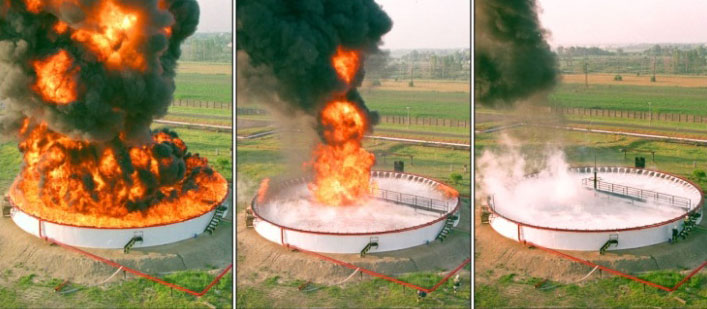
Foam fire suppression systems are classified as high, medium, or low expansion, depending on their application.
This type of system is ideal for situations where water or gas alone would not provide the same extinguishing capability as foam.
The most common application involves flammable and combustible liquids.
Foam is an effective solution when there is a particularly high risk of re-ignition and the flammable material needs to be isolated from oxygen for an extended period.
Main areas of application
- Chemical industry
- Oil & Gas
- Refineries
- Power plants
- Waste incineration plants
- Logistics halls with high plastic content
- Aircraft maintenance hangars
- Helicopter pads
- Offshore platforms and vessels
- Tire warehouses
- Coal silos
- Mineral oil tanks and collection containers
- Mineral oil transfer stations and much more
Low-expansion foam
Expansion ratio: 8–20
Low-expansion foam is a foam characterized by high density and low volume.
It is used for fires involving liquids or solids classified as Class A and B fires.
The extinguishing effect of low-expansion foam relies largely on separation and cooling.
Medium-expansion foam
Expansion ratio: up to 200 times.
Medium-expansion foam
is a foam characterized by low weight and high volume.
It is significantly lighter than low-expansion foam. In addition to its smothering effect, medium-expansion foam also provides a cooling extinguishing effect.
High-expansion foam
Expansion ratio: over 200 times.
High-expansion foam is exceptionally lightweight and voluminous.
Due to its low weight, it cannot be "thrown" but must be delivered to the fire zone via special foam generators.
Its extinguishing action relies primarily on separation and smothering effects.